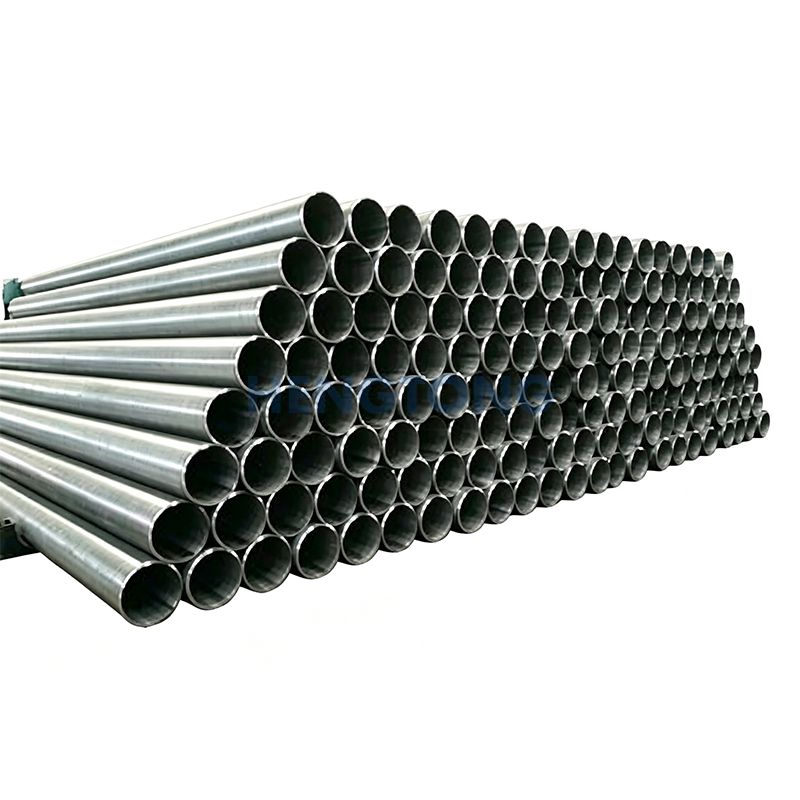
ASTM A691 Electric-Fusion-Welded Steel Pipe
ASTM A691 电熔焊钢管
Steel Pipes / Longitudinal Submerged Arc Welded Steel Pipe
ASTM A691 Electric-Fusion-Welded Steel Pipe
ASTM A691 电熔焊钢管
Need a quotation or catalog for this product? Send an inquiry — we will reply as soon as possible.
Get a Quote →Product Description
Product Overview
ASTM A691 electric‑fusion‑welded steel pipe belongs to the category of electric‑fusion‑welded tubular products. Its forming principle relies on the electric‑fusion welding process: an electric arc is generated between a single or multiple molten‑weld electrodes and the workpiece, melting the base metal and fusing it to form a continuous pipe body.
This product is manufactured from steel plates specially designed for pressure vessels, offering a variety of chemical compositions and strength grades. The raw materials are primarily categorized into carbon steels and alloy steels. It is produced using either manual or fully automated electric‑arc welding processes, ensuring long‑term stable operation under high‑temperature and high‑pressure conditions. The product adheres to stringent weld‑appearance standards: weld reinforcement is uniform and well‑filled, transitions are smoothly rounded, and the filler metal exhibits excellent fusion with the base metal surface, with no lack‑of‑fusion defects.
ASTM A691 electric‑fusion‑welded steel pipe billets are produced from full‑width steel plates or hot‑rolled steel strips. As continuous rolling processes for high‑quality steel strips have matured and welding and nondestructive testing technologies have continued to advance, weld quality has steadily improved, and the range of product specifications has expanded. Compared with seamless steel pipes, electric‑fusion‑welded pipes offer lower overall procurement costs and higher production efficiency in large‑volume applications, with their core performance advantages manifesting in three key areas:
High mechanical strength
1.25 Chromium alloy grade: tensile strength ≥ 415 MPa, yield strength ≥ 205 MPa, elongation after fracture ≥ 22%;
Excellent high-temperature resistance
It can withstand continuous operating temperatures of up to 600°C and is suitable for a wide range of high-temperature industrial piping systems.
Outstanding corrosion resistance
The material contains 1.25% chromium, significantly enhancing its high-temperature oxidation resistance and its resistance to hydrogen sulfide corrosion under petrochemical operating conditions.
Our factory specializes in providing end-to-end custom manufacturing of JCOE large-diameter, straight-seam submerged-arc welded steel pipes.
Complete Technical Specifications Sheet
| Product Series | JCOE LSAW steel pipe | Coated pipe |
|---|---|---|
| Outer Diameter (OD) | 457mm-1422mm (18"-56") | 219mm-1620mm |
| Wall thickness (W/T) | 8mm-50mm | The coating does not alter the wall thickness of the base tube. |
| Length (L) | 5800mm-12300mm | 5800mm-12300mm |
| Material Grade | Q235, Q345, X42, X46, X52, X56, X60, X65, X70, X80, and alloy steel grades conforming to ASTM A691 | Support for anti-corrosion coating systems and standards: 1. FBE / 2FBE: CAN/CSA Z 245.20, DIN 30671; 2. 2LPE / 3LPE: CAN/CSA Z 245.21, DIN 30670; 3. 2LPP / 3LPP: DIN 30678, NFA49711 |
| Implementation Standard | API Spec 5L (PSL1, PSL2), ASTM A252, ASTM A672, ASTM A691, ISO3183 | German and Canadian Standards for the Anti-Corrosion Industry |
| Annual production capacity | 150,000 tons per year | It can coat 1,200 square meters every 12 working hours. |
Introduction to Surface Treatment for Pipeline Corrosion Protection
During the anti-corrosion construction of oil and gas transmission pipelines, surface preparation of straight-seam steel pipes is a critical factor determining the long-term service life of the anti-corrosion coating. Only proper surface treatment can ensure strong adhesion between the anti-corrosion coating and the steel pipe substrate.
Data from professional testing agencies indicate that, influenced by factors such as coating type, coating thickness, and application environment, surface preparation quality accounts for approximately 50% of the overall service life of the anti-corrosion system. Therefore, all surface‑preparation processes must strictly adhere to relevant standards and continuously optimize surface roughness and cleanliness.
Main Surface Pretreatment Processes
Shot blasting and sandblasting treatment
A high‑power motor drives the impeller to rotate at high speed, and centrifugal force propels steel shot, steel grit, cut wire shot, and mineral abrasives to impact the pipe surface at great velocity. This process thoroughly removes scale, rust, and contaminants; meanwhile, the intense impact and friction of the abrasive media produce an anchor‑pattern roughness that meets coating‑application standards and exhibits uniform distribution.
Solvent and Emulsion Cleaning
The steel pipe surface is wiped with an organic solvent to remove grease, lubricating oil, and other organic contaminants. This process cannot eliminate rust, oxide scale, or weld slag residues; it serves only as an auxiliary pre‑cleaning step prior to the primary rust removal.
Rust removal with electric/manual tools
The primary method employs wire-brush abrasive tools, which can remove loose rust and oxide scale. Manual tools can achieve a surface cleanliness rating of Sa2, while power tools can reach Sa3; however, for hard, firmly adherent oxide scales, tool-based cleaning cannot produce the adequate anchor profile required for effective corrosion‑protective coating application.
Popular search keywords
ASTM A691 electric‑fusion‑welded steel pipe, Chinese alloy welded pipe manufacturer, bulk supplier of high‑pressure pipelines, factory‑direct wholesale, bulk‑purchase discounts, high‑pressure electric‑fusion‑welded steel pipe, polyethylene‑coated anti‑corrosion steel pipe, ASTM A252 pile‑foundation steel pipe, domestically produced gas transmission pipeline, medium‑temperature, high‑pressure electric‑fusion‑welded steel pipe, ASTM A671 carbon‑steel welded pipe
Specifications
| Product Series | JCOE LSAW steel pipe | Coated pipe |
|---|---|---|
| Outer Diameter (OD) | 457mm-1422mm (18"-56") | 219mm-1620mm |
| Wall thickness (W/T) | 8mm-50mm | The coating does not alter the wall thickness of the base tube. |
| Length (L) | 5800mm-12300mm | 5800mm-12300mm |
| Material Grade | Q235, Q345, X42, X46, X52, X56, X60, X65, X70, X80, and alloy steel grades conforming to ASTM A691 | Support for anti-corrosion coating systems and standards: 1. FBE / 2FBE: CAN/CSA Z 245.20, DIN 30671; 2. 2LPE / 3LPE: CAN/CSA Z 245.21, DIN 30670; 3. 2LPP / 3LPP: DIN 30678, NFA49711 |
| Implementation Standard | API Spec 5L (PSL1, PSL2), ASTM A252, ASTM A672, ASTM A691, ISO3183 | German and Canadian Standards for the Anti-Corrosion Industry |
| Annual production capacity | 150,000 tons per year | It can coat 1,200 square meters every 12 working hours. |