
Pipe overlay welding with nickel-based alloy 825
管道堆焊镍基合金825
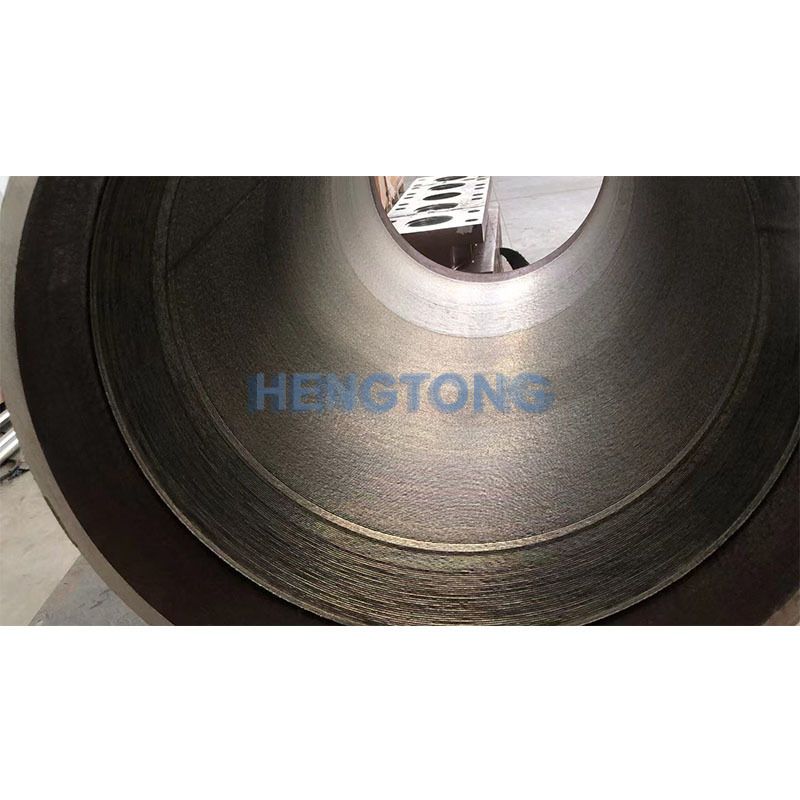
Wear-Resistant Piping / Nickel-based surfacing
Pipe overlay welding with nickel-based alloy 825
管道堆焊镍基合金825
Need a quotation or catalog for this product? Send an inquiry — we will reply as soon as possible.
Get a Quote →Product Description
Product Overview and Solutions
Nickel-based alloy overlay welding is a metallurgical cladding process that employs gas tungsten arc welding (GTAW) and submerged arc welding (SAW) to deposit high-performance nickel-based alloys—such as Inconel 625, Incoloy 825, and Hastelloy C276—onto the surfaces of carbon steel, low-alloy steel, and pipeline steel substrates, thereby forming a composite structure with full metallurgical bonding. The resulting product retains the substrate’s excellent structural strength and cost advantages while also offering outstanding corrosion resistance, high-temperature stability, and wear resistance.
Core Process and Operating Principle
Unlike mechanical linings and sprayed coatings, nickel-based overlay welds form atomic‑level metallurgical bonds with the base material, eliminating the risk of delamination or spalling. Composite components can be subjected to secondary bending, field welding, and post‑weld heat treatment (PWHT), making them an indispensable fabrication solution for demanding industrial service conditions.
Mainstream surfacing welding processes:
Gas Tungsten Arc Welding (GTAW)
Suitable for precision cladding on flanges, small-diameter pipelines, and complex-shaped pipe fittings, delivering high weld quality and precisely controllable overlay thickness.
Submerged Arc Welding (SAW)
High-efficiency machining of large-diameter pipes and thick-walled components; the overlay weld layer is uniform and dense, with a deposition thickness range of 8–30 mm, making it well suited for high-volume production.
Product Categories and Application Fields
Our company offers a full range of nickel-based surfacing products and custom machining services.
1. Pipeline Category
Bimetallic overlay-welded composite pipes, straight pipes, and process pipelines, with sizes ranging from DN50 to DN2400 and pressure ratings from PN2.5 to PN400.
2. Pipe fittings and flanges
Weld overlay elbows, tees, reducers, pipe caps, special forgings, and full‑face weld‑overlay flanges/pipe‑plate cover plates.
3. Customized Supporting Services
Weld overlay machining of incoming materials, prefabrication through machining, on-site pressurized tapping, and repair and refurbishment of wear-resistant components.
Applicable Industries
Oil and gas, and petrochemical industries: sour-service pipelines, pipelines for transporting corrosive media, and high-temperature, high-pressure process pipelines.
Power and metallurgical industries: desulfurization pipelines, boiler components, and high-temperature flue gas conveyance systems;
Other severe service conditions: equipment and piping in wastewater treatment, coal chemical processing, offshore engineering, and other applications where corrosion and erosion coexist.
Core Advantages and Performance Specifications
| Performance Metrics | Nickel-based surfacing composite product |
|---|---|
| Corrosion and wear resistance | Performance is equivalent to that of a solid nickel-based alloy forging. |
| Bonding strength | Metallurgical bonding, with no risk of delamination or flaking. |
| Cost advantage | Compared with pure nickel-based alloy piping, costs are reduced by 30%–50%. |
| Machinability | It is bendable, weldable, and amenable to heat treatment, with excellent machinability. |
| Service life | Longer service life, significantly reducing maintenance frequency. |
Available options for substrate and overlay materials
Base materials can be selected from carbon steel, stainless steel, and pipeline steel (such as ASTM A53 Grade B, API 5L series, etc.);
The cladding layer can be selected from 304/316L stainless steel, various nickel-based alloys, duplex stainless steel, and more, with material options tailored to the specific operating conditions and process media.
Improve the quality assurance system
The end-to-end quality inspection process encompasses pre-weld ultrasonic testing, post-weld heat treatment, and final precision machining, supported by complementary testing procedures such as material spectral analysis (PMI), metallographic examination, hardness testing, and hydrostatic pressure testing, fully compliant with industry standards.
Durability performance
The overlay weld layer can withstand prolonged exposure to various corrosive media, including acids, alkalis, and hydrogen sulfide. The wear‑resistant overlay weld layer achieves a hardness of HRC 58–63 and maintains stable performance without degradation even in high‑temperature environments ranging from 500 to 600°C.
Summary
Nickel-based alloy overlay welding balances service performance with economic efficiency, making it the preferred solution for industrial piping systems. By pairing a low-cost, high-strength carbon steel substrate with an outstanding corrosion- and wear-resistant nickel-based alloy cladding, this approach delivers long-lasting, reliable performance across a wide range of extreme operating conditions, significantly reducing both initial equipment investment and subsequent maintenance costs.
Specifications
| Performance Metrics | Nickel-based surfacing composite product |
|---|---|
| Corrosion and wear resistance | Performance is equivalent to that of a solid nickel-based alloy forging. |
| Bonding strength | Metallurgical bonding, with no risk of delamination or flaking. |
| Cost advantage | Compared with pure nickel-based alloy piping, costs are reduced by 30%–50%. |
| Machinability | It is bendable, weldable, and amenable to heat treatment, with excellent machinability. |
| Service life | Longer service life, significantly reducing maintenance frequency. |